
Pela BRQ iniciei esse projeto no fim de 2020, que pretendia implementar um boletador no segmento Private do Itaú. Um boletador é um sistema que gera ordens (boletos) de investimento ou retirada de fundos, renda fixa ou variável. Fui o único designer a atuar no projeto.
As boletas eram feitas a partir de diversos sistemas diferentes, dependendo do ativo negociado. Inicialmente, era necessário centralizar tudo em um sistema para melhor governança.
O trabalho aconteceu totalmente remoto. O problema foi explicado pelas project owner (PO) e uma analista, com quem fazia reuniões. Houve diversas conversas com pessoas em várias áreas para entender como eram feitas as boletas. Benchmarks vagamente similares foram estudados, como os de home broker. Também foi entendido o fluxo de compra e venda para cada tipo de ativo.
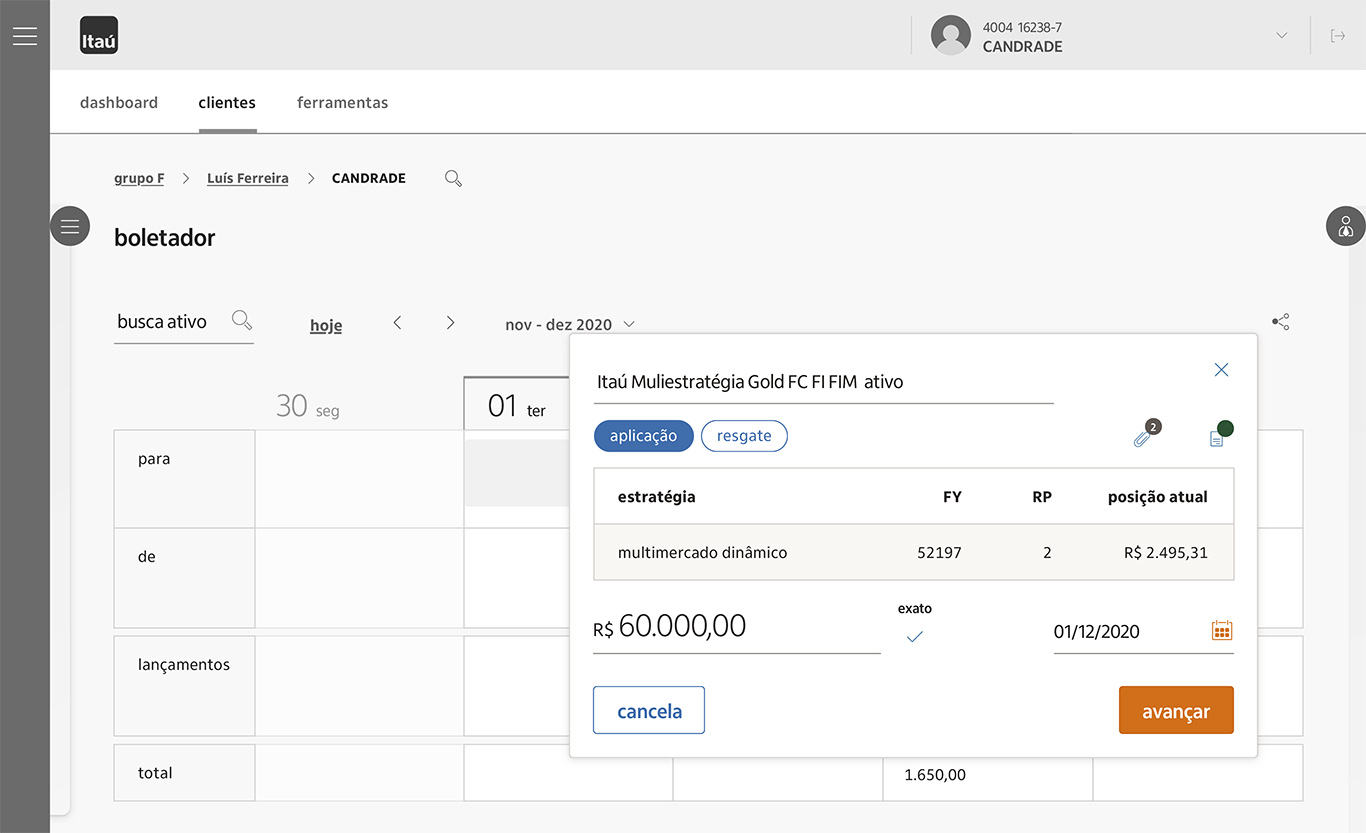
Tela de protótipo em média fidelidade, ainda preliminar
O projeto foi evoluindo a partir de alternativas bem diferentes. A inicial priorizava as datas, com layout de calendário, e outra, mais simples, trazia as boletas em uma tabela. Houve testes de usabilidade, de forma remota, para as duas versões.
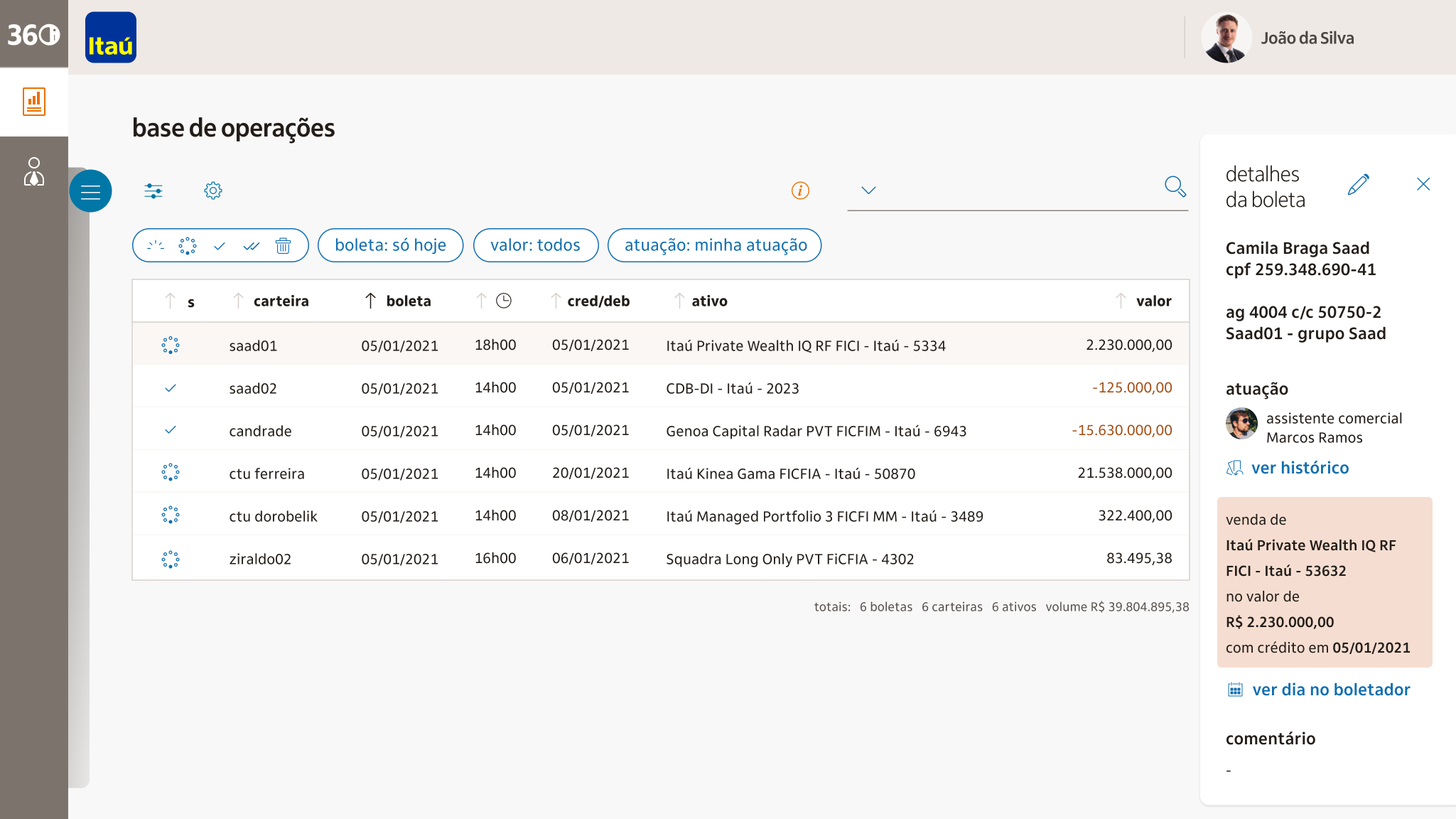
Tela de versão aprimorada da versão tabela. Aqui reutilizei uma solução que criei em outro projeto, pro caso no qual não cabe todas as informações em tabela sem scroll horizontal: trazer mais detalhes apenas ao clicar na linha mas sem esconder a tabela.
Apesar da ideia de calendário ter sido bem apreciada, a versão de tabela seguiu adiante por ser mais rápida de ser criada. Quando ela já estava começando a ser desenvolvida, o Itaú começou um grande projeto de unificação de todas as ferramentas num único portal que viria a ser chamado Íon for Advisors (IFA). Ela seria para todos os especialistas em investimentos do banco. A plataforma nova que era usada principalmente por gerentes de agências, o 360i, não seria mais usada pelos especialistas não só do Private mas também do resto do banco.
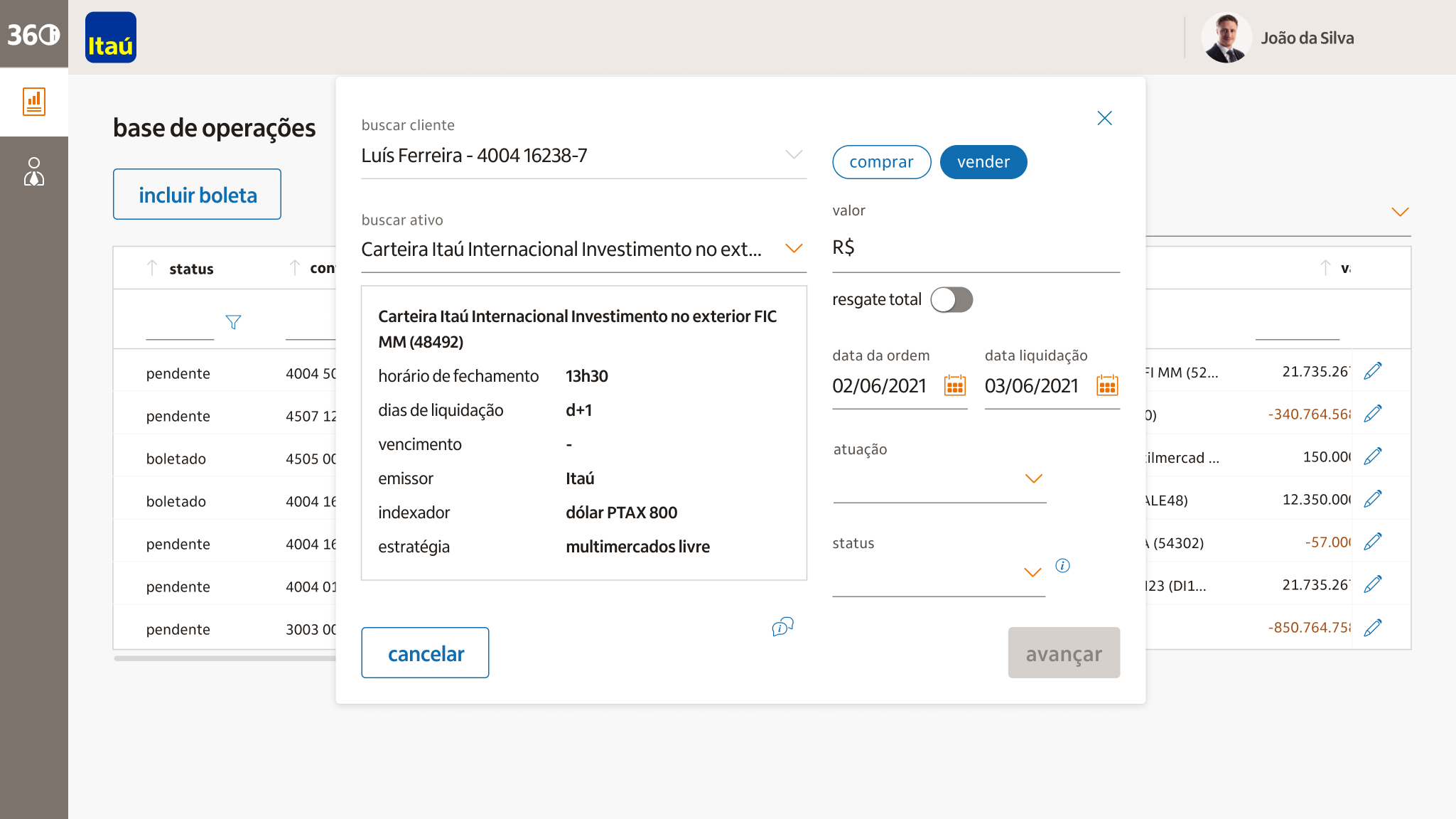
Tela de versão MVP escolhida antes da reviravolta para layout do IFA
Como designer atuante no Private do banco há algum tempo, fui escolhido como “voz” em diversas conversas na criação do IFA. Nova identidade visual foi criada e eu acompanhei a mudança e ajustes necessários inclusive em outros fluxos no IFA (ao participar em Design Critiques de projetos de colegas). Não pude ver a implementação final ir ao ar pois passei a atender outro cliente por mais de 1 ano. Ao voltar a atender o Itaú, fiquei sabendo que o boletador era uma das ferramentas mais utilizadas no IFA. No momento da escrita deste case, no início de 2025, também não tenho mais acesso ao layouts já no IFA.
Além de reunir informações de áreas diferentes para criação dos layouts de compra e venda de diferentes tipos de ativos, aprendi com a reviravolta que foi o início do Íon for Advisors. Foi possível perceber “silos” que se criam em diversos grupos de squads que eram mais distantes. E os designers, ao conversarem entre si, quebravam as barreiras dessas separações.
I started this project at BRQ in late 2020, which aimed to implement a "boleta" (investment/withdrawal ticket) control in Itaú's Private segment. A "boleta" may be related to investment or withdrawal orders in funds, fixed or variable income. I was the only designer to work on the project.
The tickets were made from several different systems, depending on the asset traded. Initially, it was necessary to centralize everything in one system for better governance.
The work was done entirely remotely. The problem was explained by the project owner (PO) and an analyst, with whom I held meetings. There were several conversations with people in various areas to understand how the "boletos" were made. Vaguely similar benchmarks were studied, such as those of home brokers. The purchase and sale flow for each type of asset was also understood.
Medium fidelity prototype screen, still preliminary
The project evolved from very different alternatives. The initial one prioritized dates, with a calendar layout, and another, simpler one, presented the "boletas" in a table. There were usability tests, remotely, for both versions.
Improved version of the table version. Here I reused a solution I created in another project, for cases where not all the information fits in a table without horizontal scrolling: bring up more details just by clicking on the row but without hiding the table.
Although the calendar idea was well-received, the table version went ahead because it was quicker to create. When it was already beginning to be developed, Itaú began a major project to unify all the tools into a single portal that would come to be called Íon for Advisors (IFA). It would be for all the bank's investment specialists. The new platform that was used mainly by branch managers, 360i, would no longer be used by specialists not only from Private but also from the rest of the bank.
Screenshot of chosen MVP build before layout turnaround
As a designer who has been working in the bank's Private for some time, I was chosen as a “voice” in several IFA conversations. A new visual identity was created and I followed the changes and necessary adjustments, including in other flows at IFA (by participating in Design Critiques of colleagues' projects). I was unable to see the final implementation go live because I started working with another client, where I stayed for over one year. When I returned to work with Itaú, I learned that the Ticket control was one of the most used tools at IFA. At the time of writing this case, in early 2025, I also no longer have access to the layouts at IFA.
In addition to gathering information from different areas to create layouts for buying and selling different types of assets, I learned from the upheaval that was the beginning of Íon for Advisors. It was possible to notice “silos” that were created in different groups of squads that were more distant. And the designers, by talking to each other, broke down the barriers of these separations.